WE ARE PARTNER WITH





Hearing plays an important role in communication and everyday life. If you are experiencing difficulty hearing conversations, frequently asking people to repeat themselves, or increasing the volume of your television, a hearing test can help identify whether you have hearing loss.
One of the most common hearing tests used by audiologists is Pure Tone Audiometry (PTA). It is a simple, painless, and non-invasive test that helps measure how well you can hear different sounds.
Pure Tone Audiometry is a hearing assessment used to determine the softest sounds you can hear at different pitches or frequencies.
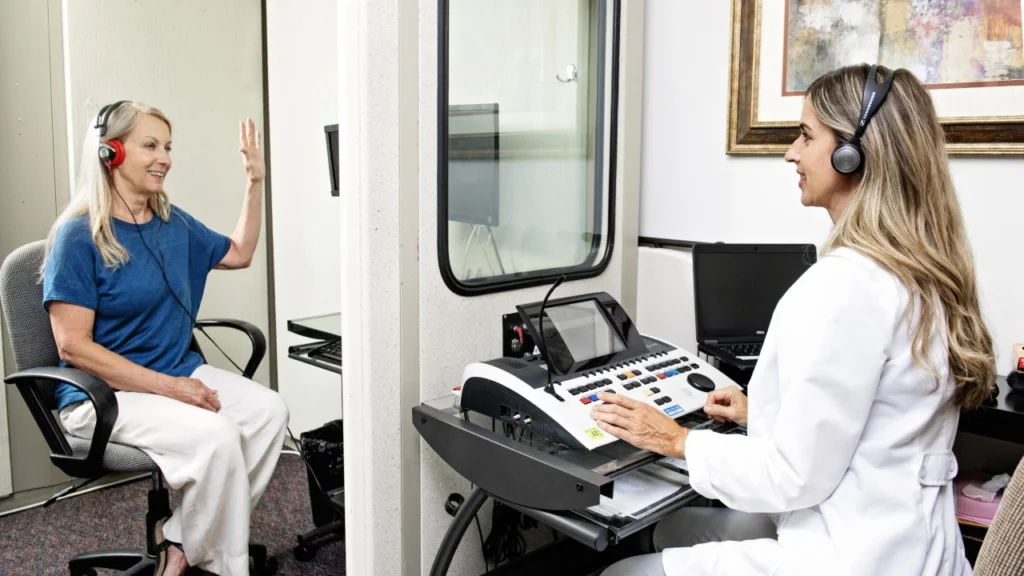
During the test, you will listen to different tones through headphones or earphones. The audiologist gradually changes the volume and frequency of the sounds to identify your hearing threshold for each ear.
The results are recorded on an audiogram, which provides a visual representation of your hearing ability.
An audiologist may recommend a PTA test if you experience symptoms such as:
A hearing test can help determine the degree and type of hearing difficulty and guide the audiologist in recommending appropriate hearing care.
The test usually begins with a conversation about your hearing concerns, medical or hearing history, and the situations where you experience difficulty hearing.
This helps the audiologist understand your individual hearing needs.
You will be seated in a quiet environment, often inside a sound-treated room or booth. The purpose is to minimize background noise during the hearing assessment.
The audiologist will place headphones or insert earphones over or inside your ears. Each ear is generally tested separately.
You will hear different tones that may vary in pitch and loudness.
Whenever you hear a sound—even if it is very soft—you will be asked to respond according to the audiologist’s instructions. You may press a button, raise your hand, or give another agreed response.
There are no right or wrong answers. The goal is simply to indicate when you can hear the sound.
The audiologist gradually adjusts the sounds to find the softest level you can hear at different frequencies.
This information is used to understand your hearing sensitivity in each ear.
No. Pure Tone Audiometry is generally painless and non-invasive.
You simply listen to sounds and respond when you hear them. The test does not involve injections or any uncomfortable procedures.
The duration can vary depending on the individual and the type of hearing assessment being performed. A standard pure tone hearing test is generally completed within a relatively short appointment.
Your audiologist will explain the process and guide you throughout the test.
After the test, your audiologist will review the results with you. The audiogram helps show how well you hear different frequencies and whether hearing loss is present.
Your audiologist can explain what the results mean and discuss whether further evaluation, hearing protection, hearing aids, or other hearing-care options may be appropriate.
Hearing loss can develop gradually, and many people may not recognize the changes immediately. Regular hearing evaluations can help identify hearing difficulties at an earlier stage.
If you notice changes in your hearing, don’t wait until communication becomes difficult. A professional hearing assessment can help you understand your hearing health and take the right next step.
A Pure Tone Audiometry test is a simple and useful way to understand your hearing ability. If you are concerned about your hearing or have noticed any changes, speak with a qualified audiologist.
Early awareness can lead to better hearing care and better communication.
Book your hearing assessment today and take the first step towards clearer communication and better hearing.