WE ARE PARTNER WITH





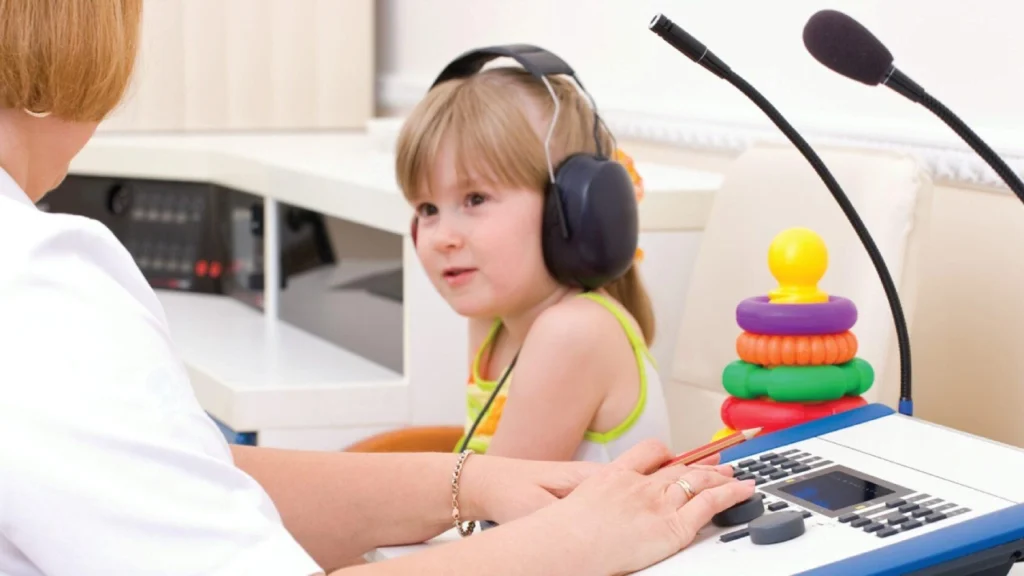
Hearing plays an important role in a child’s speech, language, learning, and social development. When a child has difficulty hearing, it can sometimes go unnoticed because the signs may be subtle or mistaken for other developmental or behavioural issues.
Recognizing possible signs of hearing loss early can help parents seek professional advice and support when needed. Here are some important signs parents should watch for.
Babies usually begin responding to sounds around them as they grow. If your baby does not react to loud sounds, familiar voices, or other everyday noises, it may be worth discussing this with a healthcare professional.
Parents may notice that their baby does not turn towards a parent’s voice or seems unaware when someone speaks nearby.
Hearing is closely connected to speech and language development. A child who has difficulty hearing may take longer to start speaking or may have difficulty developing clear speech.
If your child is not reaching expected communication milestones or seems to have difficulty learning new words, a hearing evaluation may be helpful.
Older children with hearing difficulties may frequently ask people to repeat what they have said.
If your child regularly says “What?” or “Huh?”, especially when communicating from another room or during conversations, it may be a sign that they are struggling to hear clearly.
Does your child consistently prefer the television, tablet, or phone at a very high volume?
Although listening preferences can vary, regularly needing higher volume than others in the family may be a reason to have your child’s hearing checked.
A child who cannot hear instructions clearly may appear distracted, inattentive, or as though they are not listening.
For example, they may respond correctly when instructions are given face-to-face but struggle when someone speaks from behind them or from another room.
Classrooms, playgrounds, birthday parties, and family gatherings can be challenging for children with hearing difficulties.
Your child may have trouble following conversations when there is background noise or may become frustrated during group activities.
Some children with hearing difficulties may have unclear pronunciation or difficulty producing certain speech sounds.
If you notice that your child’s speech development seems different from other children of a similar age, discussing their hearing with a qualified professional can be an important step.
Sometimes hearing difficulties can look like behavioural problems. A child may appear distracted, frustrated, withdrawn, or unwilling to participate because they are struggling to understand what is being said.
It is important not to assume that these behaviours are simply due to a lack of attention or interest.
Identifying hearing difficulties early can help children receive appropriate support for communication, learning, and social development.
If you notice one or more of these signs, it does not necessarily mean that your child has permanent hearing loss. There can be different reasons for hearing difficulties, so a professional assessment is important to understand the cause.
Parents should consider speaking with a qualified audiologist if they notice:
A hearing assessment can help determine whether your child is hearing normally and whether any further evaluation or support is required.
Good hearing supports communication, learning, and everyday interaction. Paying attention to early signs and seeking professional advice when concerns arise can make an important difference.
If you are concerned about your child’s hearing, don’t wait for the problem to become more noticeable. Talk to a qualified audiologist and consider a professional hearing evaluation.
Early attention to hearing can support better communication, learning, and confidence as your child grows.